

Description
Slicing into your homegrown apples only to find tunnels and brown mess inside? Codling moth larvae burrow into the fruit while it’s still on the tree, contaminating the core and causing premature drop. This codling moth trap helps protect apple and pear trees by catching male moths before they mate.
Codling moths are one of the most destructive pests in orchards and gardens. Adult moths lay eggs on fruit and leaves, and when larvae hatch, they tunnel straight into the fruit to reach the seed nest, leaving contaminated flesh and spoiled crops. This pheromone trap uses a species-specific lure, integrated into the sticky back plate, to attract male codling moths through six entry holes onto a glue-covered surface where they stick. By reducing breeding activity during the season, it helps limit the next generation of larvae without the need for insecticide sprays.
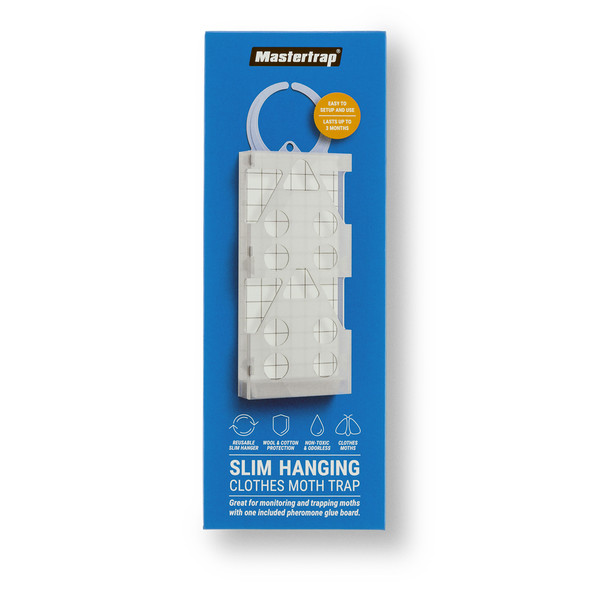
The trap has a white sticky back plate and a transparent protective cover. The outer cover protects birds from the glue and helps shield the sticky surface from leaves, rain and debris.
Selective, non-toxic and weather-resistant, it is suitable for use from early May through to the end of August. Only codling moths are attracted, leaving bees, bumblebees and other pollinators unaffected.
For plum trees and stone fruit, see our plum moth trap.
How to Use
Remove the trap from the clear bag, pass the hanging tie through the hole at the top, and hang it in your apple or pear tree before moth activity begins, ideally from early May. There is nothing to fit together and no protective sheet to remove.
Hang the trap on a branch at around 1.5–2.5 metres high, where air can circulate around it and moths can easily enter through the side openings. Keep it in place from May to the end of August to target both the first and second generation of codling moths. The trap is effective for up to 2 months from hanging; replace it sooner if the sticky surface becomes covered with insects, pollen or dust. Check the trap every 2–3 days during the active season.
How Many Traps Do I Need?
For a small apple or pear tree, use 1 trap. For a medium or large tree, use 2 traps to improve coverage. For plantations and orchards, use 2 traps per 1.5 hectares.
Key Features:
Ready to hang — supplied assembled with the sticky back plate and transparent cover already in place.
Pheromone specific to codling moths (Cydia pomonella) — integrated lure attracts only the target species.
Six entry holes — guide moths onto the glue-covered trap surface for effective capture.
Safe for bees and other pollinators — selective attraction ensures beneficial insects are unaffected.
Weather-resistant protective cover — helps shield the sticky surface from birds, leaves, rain and debris.
Dimensions:
Length: 22.5cm
Width: 14.5cm
Depth: 1.3cm
Contents:
1 x Codling pheromone moth trap with hanging tie.
Frequently Asked Questions
Do I need to remove a protective sheet to activate the pheromone?
No. There is no protective sheet to remove. The pheromone lure is already incorporated into the sticky back plate, so the trap is ready to use straight from the bag.
How long does the codling moth trap last?
The trap is effective for up to 2 months after hanging. Replace it sooner if the sticky surface becomes heavily covered with insects, pollen or dust.
When should I put codling moth traps out?
Hang codling moth traps from early May through to the end of August to cover the main codling moth season in apple and pear trees.
Why are there no moths in my trap?
If no moths are caught, there may be little or no codling moth activity at that time, or the trap may need repositioning. Make sure it is hanging on a branch where air can circulate freely and moths can easily enter through the side openings.
Can I use this codling moth trap on apple and pear trees?
Yes. This trap is suitable for both apple trees and pear trees.
Is this codling moth trap safe for bees?
Yes. The pheromone lure is specific to codling moths, so bees, bumblebees and other pollinators are not attracted to the trap.
Additional Information
summary: |
Monitor and control codling moth activity in apple and pear trees to help protect developing fruit. |